

 240min


Description
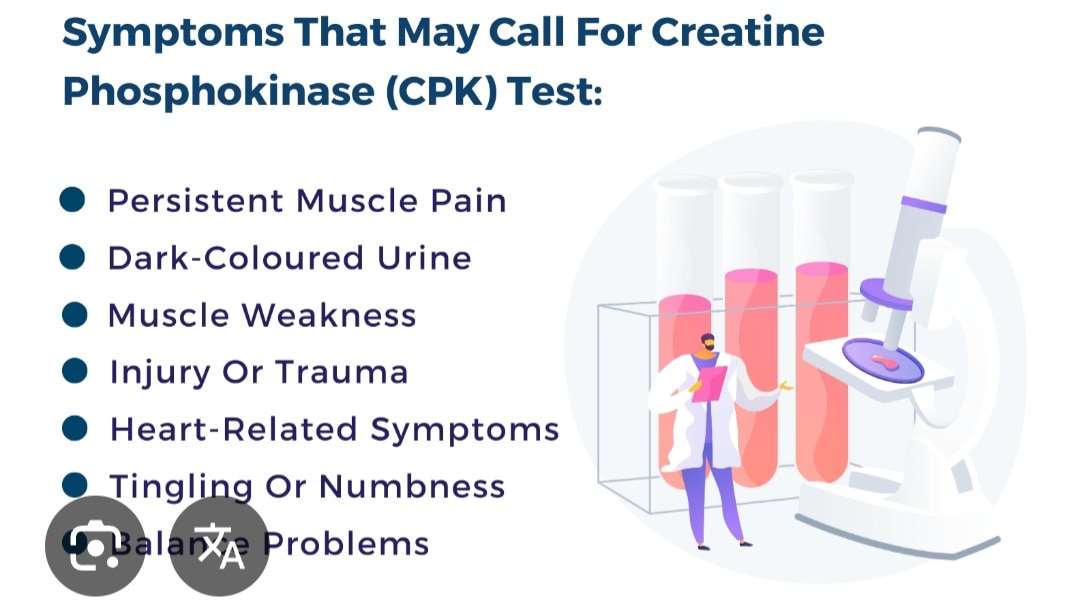
A CPK total test, or Creatine Phosphokinase total test, measures the total amount of the enzyme creatine phosphokinase in your blood, which indicates damage to heart, brain, or muscle tissue. Healthcare professionals order this test to diagnose and monitor conditions like heart attacks, stroke, muscular dystrophy, or rhabdomyolysis by observing high CPK levels that signal tissue injury. The test is performed by taking a blood sample, and abnormal levels help pinpoint the location of muscle damage. What a CPK Total Test Measures CPK Enzyme: Creatine phosphokinase is an enzyme vital for energy production in the heart, brain, and skeletal muscles. Tissue Damage: When these tissues are damaged, the CPK enzyme is released into the bloodstream, making it a valuable indicator of muscle or heart injury. Why a CPK Test is Ordered A CPK total test is used to: Diagnose Muscle Damage: To assess the severity of muscle damage from an injury, overuse, or conditions like polymyositis. Detect Heart Attacks: To help diagnose a heart attack by checking for elevated CPK levels, particularly in conjunction with the CPK-MB isoenzyme test. Monitor Conditions: To monitor the progression of muscle diseases like muscular dystrophy or to assess damage from neurological issues like a stroke or prolonged seizures. Investigate Symptoms: To investigate unexplained muscle pain, weakness, or the causes of chest pain. How the Test is Performed 1. Blood Draw: A blood sample is collected from a vein in your arm, a process called venipuncture. 2. Laboratory Analysis: The collected blood sample is sent to a lab to measure the total amount of CPK in the blood. What High CPK Levels Indicate High CPK levels in the blood can suggest damage to: Skeletal Muscles: Conditions like muscular dystrophies, rhabdomyolysis (muscle breakdown), or myopathy. Cardiac Muscle: A heart attack (myocardial infarction) or myocarditis (inflammation of the heart muscle). Brain Tissue: Injury from a stroke or other brain injury


