
rview
+26
The VDRL (Venereal Disease Research Laboratory) and RPR (Rapid Plasma Reagin) tests are both screening tests used to detect syphilis, a sexually transmitted infection (STI). They detect antibodies produced in response to the syphilis infection. While both tests are effective for early syphilis detection and monitoring treatment, the RPR test is often preferred due to its faster results and ease of use.
Key Differences and Similarities:
Purpose:
Both tests aim to identify the presence of antibodies that the body produces when infected with syphilis.
Test Type:
VDRL is a microscopic flocculation test, while RPR is a macroscopic agglutination test.
Specificity:
Both tests can have false-positive results, meaning they may indicate syphilis when the person is not actually infected.
Sensitivity:
Both tests are highly sensitive, meaning they can detect syphilis even in early stages.
Use in Diagnosis:
While the VDRL test can be used on spinal fluid, the RPR test is typically used on blood samples.
Monitoring Treatment:
Both tests can be used to monitor the effectiveness of syphilis treatment by tracking the decrease in antibody levels.
False Positives:
Both tests can produce false-positive results due to other conditions, so confirmatory tests like the FTA-ABS or TP-PA are often used.
In essence, the RPR test is often used as the primary screening test due to its speed and simplicity, while the VDRL test might be used in specific situations or for confirmatory purposes.
Procedure:
A blood sample is drawn from a vein, usually in the arm.
The blood is sent to a laboratory for analysis.
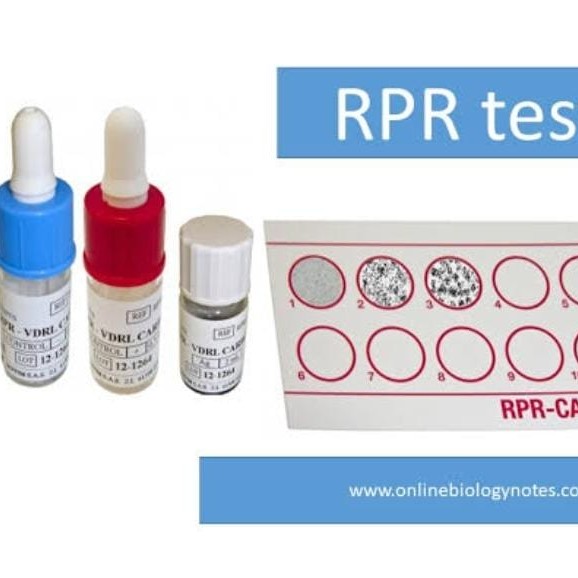
The RPR test involves mixing the blood serum with a reagent containing cardiolipin, lecithin, and cholesterol.
If antibodies are present, they will bind to the reagent, forming visible clumps (agglutination).
The VDRL test involves mixing the blood serum with a reagent and observing under a microscope for flocculation.
Results:
Negative: No antibodies detected, indicating no current or past syphilis infection.
Positive: Indicates the presence of antibodies, suggesting a possible syphilis infection.
Positive results require further testing to confirm the diagnosis and determine the stage of the infection.
In Pimpri Chinchwad Pune
Exploring Truth...
NIDAN
Pathology Laboratory
ISO 9001:2015 Certified
Book Free Home Collection : 7775837228/8999989854
Email Id: nidanpathology331@gmail.com
Rupeenagar
Chakan |
Punawale
Wakad |
Pimpari |
Krushnanagar |
Ravet
+26
The VDRL (Venereal Disease Research Laboratory) and RPR (Rapid Plasma Reagin) tests are both screening tests used to detect syphilis, a sexually transmitted infection (STI). They detect antibodies produced in response to the syphilis infection. While both tests are effective for early syphilis detection and monitoring treatment, the RPR test is often preferred due to its faster results and ease of use.
Key Differences and Similarities:
Purpose:
Both tests aim to identify the presence of antibodies that the body produces when infected with syphilis.
Test Type:
VDRL is a microscopic flocculation test, while RPR is a macroscopic agglutination test.
Specificity:
Both tests can have false-positive results, meaning they may indicate syphilis when the person is not actually infected.
Sensitivity:
Both tests are highly sensitive, meaning they can detect syphilis even in early stages.
Use in Diagnosis:
While the VDRL test can be used on spinal fluid, the RPR test is typically used on blood samples.
Monitoring Treatment:
Both tests can be used to monitor the effectiveness of syphilis treatment by tracking the decrease in antibody levels.
False Positives:
Both tests can produce false-positive results due to other conditions, so confirmatory tests like the FTA-ABS or TP-PA are often used.
In essence, the RPR test is often used as the primary screening test due to its speed and simplicity, while the VDRL test might be used in specific situations or for confirmatory purposes.
Procedure:
A blood sample is drawn from a vein, usually in the arm.
The blood is sent to a laboratory for analysis.
The RPR test involves mixing the blood serum with a reagent containing cardiolipin, lecithin, and cholesterol.
If antibodies are present, they will bind to the reagent, forming visible clumps (agglutination).
The VDRL test involves mixing the blood serum with a reagent and observing under a microscope for flocculation.
Results:
Negative: No antibodies detected, indicating no current or past syphilis infection.
Positive: Indicates the presence of antibodies, suggesting a possible syphilis infection.
Positive results require further testing to confirm the diagnosis and determine the stage of the infection.
In Pimpri Chinchwad Pune
Exploring Truth...
NIDAN
Pathology Laboratory
ISO 9001:2015 Certified
Book Free Home Collection : 7775837228/8999989854
Email Id: nidanpathology331@gmail.com
Rupeenagar
Chakan |
Punawale
Wakad |
Pimpari |
Krushnanagar |
Ravet