
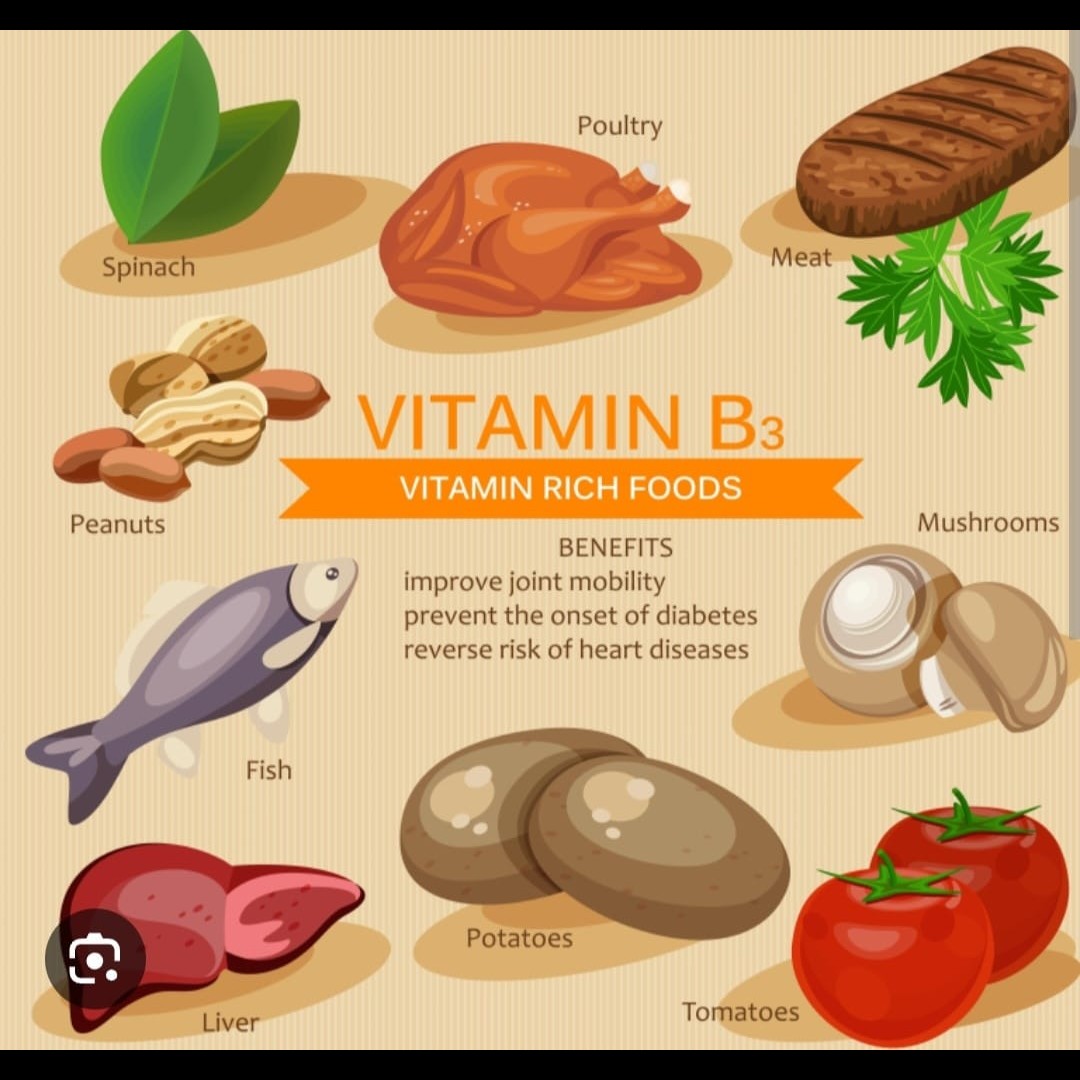
Vitamin B3, also known as niacin, is an essential water-soluble vitamin required for hundreds of metabolic reactions in the body. The body can get niacin from food or produce it from the amino acid tryptophan.
Forms of vitamin B3
The term "niacin" is used for the vitamin B3 complex, which includes several forms.
Niacin (nicotinic acid): This form can be prescribed in high doses to treat high cholesterol but can cause the common side effect of flushing.
Niacinamide (nicotinamide): This form is used for vitamin B3 deficiency because it does not cause flushing. However, it is not effective for treating high cholesterol.
Nicotinamide riboside: This is a less common form of vitamin B3 available in some supplements.
Functions in the body
As a component of the coenzymes NAD (nicotinamide adenine dinucleotide) and NADP (nicotinamide adenine dinucleotide phosphate), vitamin B3 plays a critical role in:
Converting carbohydrates, fats, and proteins into energy.
Supporting the nervous system and brain function.
Aiding in the maintenance of healthy skin and the digestive system.
Supporting DNA creation and repair.
Providing antioxidant functions.
Dietary sources
Good sources of niacin are available from both animal and plant sources.
Animal products: Poultry, beef, pork, fish (such as tuna and salmon), eggs, and beef liver are excellent sources.
Plant products: Legumes, peanuts, brown rice, seeds, whole grains, avocados, mushrooms, and fortified cereals and breads contain niacin.
Amino acid conversion: The body can convert tryptophan, an amino acid found in protein-rich foods like turkey and chicken, into niacin.
Deficiency (Pellagra)
Severe niacin deficiency is called pellagra and is rare in developed countries with fortified food supplies. Symptoms are commonly known as the "three Ds".
Dermatitis: Skin rashes or brown discoloration appear on sun-exposed areas.
Diarrhea: Digestive problems, nausea, and abdominal pain.
Dementia: Neurological issues, including confusion, memory loss, fatigue, depression, and disorientation.
Death: Untreated pellagra can be fatal.
Toxicity and side effects
While niacin from food is not toxic, high doses from supplements can cause adverse effects. The specific side effects can vary depending on the form and dose.
Flushing (nicotinic acid): High doses of nicotinic acid can cause a harmless but uncomfortable skin flush with a burning, tingling, or itching sensation. Extended-release formulas are designed to minimize this effect.
Hepatotoxicity (liver damage): Very high doses of niacin, particularly in extended-release forms, have been linked to liver damage.
Other side effects: Excessive intake can also cause upset stomach, blurred vision, and elevated blood sugar or uric acid levels, which is a risk factor for gout.
Niacin and cholesterol
High-dose nicotinic acid has been used for decades to treat dyslipidemia by improving cholesterol levels.
It can increase "good" HDL cholesterol and lower "bad" LDL cholesterol and triglycerides.
However, recent research has questioned its effectiveness for preventing cardiovascular events when used alongside statin medications.
A 2024 NIH-funded study found that excess niacin, broken down into a specific metabolite, may promote arterial inflammation and increase heart disease risk.
High-dose niacin should be taken only under medical supervision due to potential side effects and recent research findings.
Welcome to Nidan Pathology Laboratory, your trusted partner in comprehensive healthcare services., we specialize in delivering accurate pathology blood tests and preventive health check packages.
Why Choose Nidan Pathology Laboratory?
Regular checkups are an essential part of maintaining good health. At our pathology lab, we offer a comprehensive range of services to help you stay on top of your health game. Our team of experts is committed to providing you with the highest level of care and support, using the latest technology and techniques.