
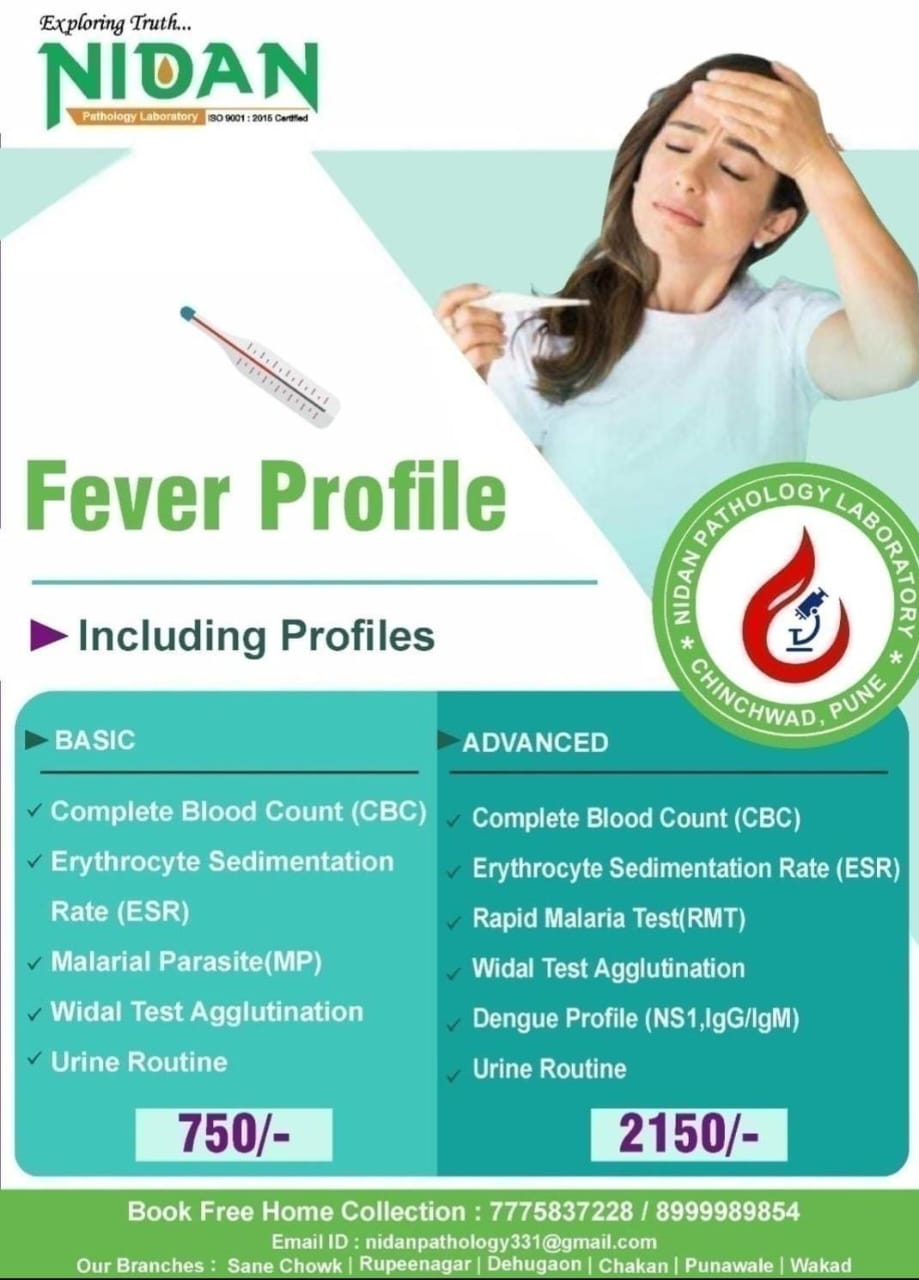
A fever profile test typically includes a Complete Blood Count (CBC), Erythrocyte Sedimentation Rate (ESR), C-Reactive Protein (CRP), and tests for specific infections like Malaria, Dengue, and Typhoid. The exact tests included can vary depending on the specific package and lab, but these are common components of a fever profile.
Here's a more detailed breakdown:
Common Tests in a Fever Profile:
Complete Blood Count (CBC): This provides information about red blood cells, white blood cells, hemoglobin, and platelets, which can indicate infection or inflammation.
Erythrocyte Sedimentation Rate (ESR): Measures how quickly red blood cells settle in a test tube, indicating inflammation.
C-Reactive Protein (CRP): Another marker of inflammation.
Malaria Test: Detects malaria parasites in the blood.
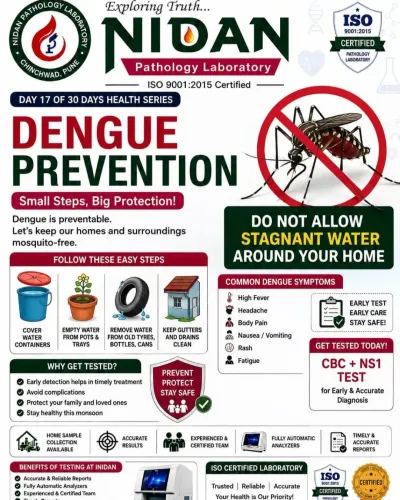
Dengue NS1 Antigen Test: Detects Dengue virus antigens.
Typhoid IgM Test (Widal Test): Detects antibodies related to typhoid fever.
Urinalysis: Examines urine for signs of infection, like bacteria or white blood cells.
Optional Tests: Depending on the specific panel and the doctor's assessment, other tests might be included, such as:
Liver Function Tests: (SGOT/SGPT)
Blood Cultures: To identify bacterial infections.
Other Specific Antigen/Antibody Tests: For other potential infectious agents based on symptoms.
Why these tests are important:
Fever is a symptom, not a diagnosis. A fever profile helps doctors pinpoint the underlying cause of the fever by identifying potential infections, inflammatory conditions, or other issues. The specific tests included in a fever profile depend on the suspected cause of the fever and the doctor's recommendations.
In Pimpri Chinchwad Pune
Exploring Truth...
NIDAN
Pathology Laboratory
ISO 9001:2015 Certified
Book Free Home Collection : 7775837228/8999989854
Email Id: nidanpathology331@gmail.com
Rupeenagar
Chakan |
Punawale
Wakad |
Pimpari |
Krushnanagar |
Ravet
Here's a more detailed breakdown:
Common Tests in a Fever Profile:
Complete Blood Count (CBC): This provides information about red blood cells, white blood cells, hemoglobin, and platelets, which can indicate infection or inflammation.
Erythrocyte Sedimentation Rate (ESR): Measures how quickly red blood cells settle in a test tube, indicating inflammation.
C-Reactive Protein (CRP): Another marker of inflammation.
Malaria Test: Detects malaria parasites in the blood.
Dengue NS1 Antigen Test: Detects Dengue virus antigens.
Typhoid IgM Test (Widal Test): Detects antibodies related to typhoid fever.
Urinalysis: Examines urine for signs of infection, like bacteria or white blood cells.
Optional Tests: Depending on the specific panel and the doctor's assessment, other tests might be included, such as:
Liver Function Tests: (SGOT/SGPT)
Blood Cultures: To identify bacterial infections.
Other Specific Antigen/Antibody Tests: For other potential infectious agents based on symptoms.
Why these tests are important:
Fever is a symptom, not a diagnosis. A fever profile helps doctors pinpoint the underlying cause of the fever by identifying potential infections, inflammatory conditions, or other issues. The specific tests included in a fever profile depend on the suspected cause of the fever and the doctor's recommendations.
In Pimpri Chinchwad Pune
Exploring Truth...
NIDAN
Pathology Laboratory
ISO 9001:2015 Certified
Book Free Home Collection : 7775837228/8999989854
Email Id: nidanpathology331@gmail.com
Rupeenagar
Chakan |
Punawale
Wakad |
Pimpari |
Krushnanagar |
Ravet