
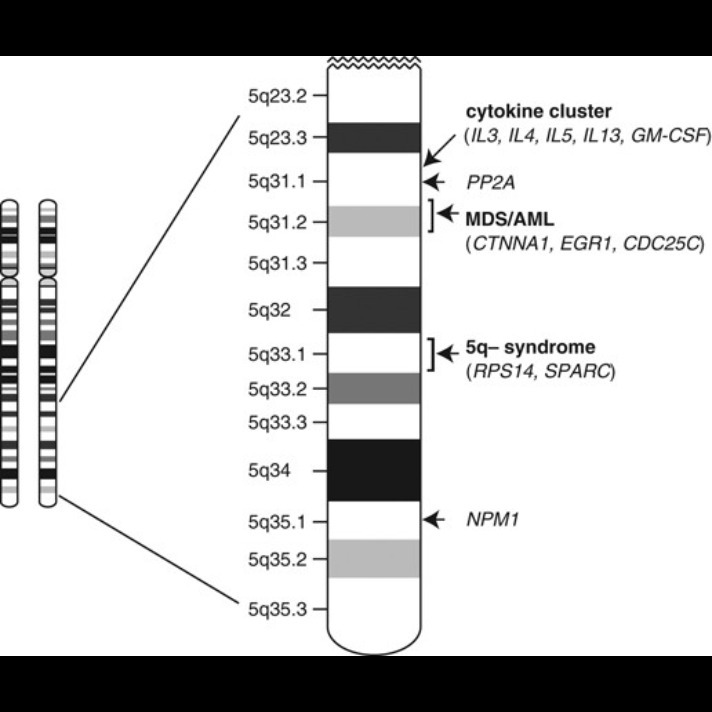
5q deletion, also known as 5q- syndrome, is a rare genetic disorder characterized by the loss of a portion of the long arm (q) of chromosome 5. This deletion occurs in bone marrow cells, causing problems with blood cell development, particularly red blood cells, leading to treatment-resistant anemia. It is most commonly associated with myelodysplastic syndrome (MDS).
Here's a more detailed explanation:
What it is:
5q deletion:
A deletion refers to the loss of a piece of DNA from a chromosome. In 5q deletion, a specific region of the long arm of chromosome 5 is missing.
Hematological disorder:
This means it primarily affects blood cells and the bone marrow, the tissue where blood cells are made.
Myelodysplastic syndrome (MDS):
A group of conditions where immature blood cells (myeloid cells) fail to develop properly, leading to an insufficient number of mature blood cells.
5q- syndrome:
A specific type of MDS caused by the 5q deletion.
Key features and symptoms:
Treatment-resistant anemia: A deficiency in red blood cells, making it difficult to carry oxygen throughout the body.
Macrocytic anemia: Anemia where red blood cells are larger than normal.
Neutropenia: A decrease in white blood cells, potentially leading to increased risk of infection.
Thrombocytosis: An increase in platelets, the cells that help blood clot.
Abnormal megakaryocytes: Unusually shaped and sized megakaryocytes, the precursor cells to platelets.
Bone marrow abnormalities: The bone marrow may show dysplastic megakaryocytes (abnormal megakaryocytes).
Causes and Risk Factors:
Acquired: 5q deletion occurs during a person's lifetime, not inherited.
Unclear cause: The exact cause of the deletion is not fully understood, but it is thought to be related to errors during cell division.
Age: 5q- syndrome is more common in older individuals.
Possible connection to MDS: 5q deletion is a common cytogenetic abnormality in MDS.
Treatment:
Lenalidomide: A drug that can be effective in managing the anemia and improving the overall condition of some patients.
Blood transfusions: May be needed to address the anemia.
Other treatments: Depending on the specific situation, other treatments, such as growth factors to stimulate blood cell production, may be considered.
Prognosis:
Variable:
The prognosis can vary depending on the severity of the condition, the presence of other abnormalities, and the individual's overall health.
Isolated 5q deletion:
Patients with isolated 5q deletions may have a more favorable prognosis compared to those with additional cytogenetic abnormalities.
Response to treatment:
Some patients respond well to treatment, such as lenalidomide, while others may require more intensive therapies.